Tag: IoT

  • What is a smart factory? Explaining the advantages, disadvantages, issues, and examples!

    What is a smart factory? Explaining the advantages, disadvantages, issues, and examples!

    Smart factories that make full use of IT technologies such as IoT and AI have the potential to be useful in situations such as failure prediction, defective product detection, human resource development, and energy conservation. Smart factories are one of the effective solutions to the challenges facing manufacturers in terms of factory operations. However, implementing it requires manufacturing knowledge and digital know-how. In order to introduce it, other issues such as initial cost and security must be resolved.

    In this article, we will discuss the advantages and disadvantages, challenges, and tips for implementing smart factories.


    What is a smart factory?

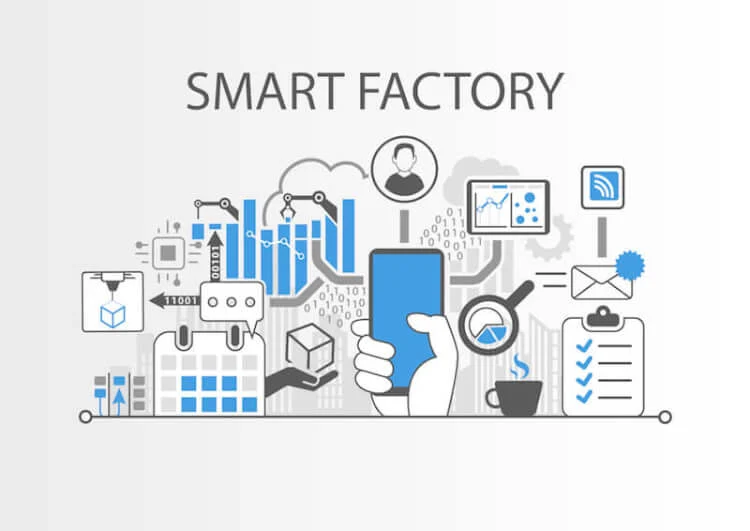
    A smart factory is a factory that connects various equipment such as machine tools and production lines to a network to improve the efficiency of information management and optimize operations.

    Traditional factory operations typically relied on skilled labor, highly technical staff, and experienced managers. However, factories, which support the backbone of the manufacturing industry, must constantly respond to a variety of issues. It is true that humans have limits when it comes to tackling issues such as failure detection, defective product detection, productivity improvement, and energy optimization.

    Currently, in addition to the sophistication of equipment, the situation is constantly changing, such as the introduction of FA equipment (factory automation equipment) that supports automation, the spread of IoT, which refers to the Internet of Things, and the practical use of AI (artificial intelligence). . It is no exaggeration to say that all operations related to factory operations are supported by IT. It is now possible to quickly link product quality and condition, factory equipment operating status, and line information, dramatically improving capabilities.

    As a result, the number of options for achieving the traditional issues of labor saving and productivity improvement has increased. With the introduction of smart factories, it is becoming easier to address pressing issues such as dealing with labor shortages and saving energy.


    [Advantages] 5 reasons why you should work on a smart factory
    What is a smart factory? Explaining the advantages, disadvantages, issues, and examples! 1
    This chapter introduces five benefits that can be gained by implementing a smart factory.


    Can solve the shortage of human resources

    Japan is experiencing a declining birthrate and aging population, and it is predicted that there will be a chronic labor shortage in the future. In the manufacturing industry, it is necessary to create an environment where even the elderly can work comfortably and to recruit human resources.

    Labor savings can be achieved by automating tasks that were previously done manually. Furthermore, by having robots perform tasks that require physical strength, it will be easier to create an environment in which skilled seniors can work comfortably. It is predicted that the declining birthrate and aging population will continue in the future, so the introduction of smart factories can be expected to be effective in the long term.

    Can promote work style reform

    The introduction of smart factories will also lead to the promotion of work style reform . As the needs of workers continue to diversify and the working population continues to decline due to the declining birthrate and aging population, work style reforms are being promoted with the aim of reducing working hours and improving productivity in order to solve these issues. I am.

    Its introduction can be expected to improve productivity and improve management efficiency in many manufacturing companies, which may lead to the promotion of work style reforms. Since it responds to the diversifying needs of workers, it can be said that it can be expected to improve employee satisfaction.

    Technology can be inherited for a long time

    Japan’s manufacturing industry has continued to make strides with its high technological capabilities, but the current situation is that technology has not been passed down. By using smart factories, you can collect know-how and skills as data. By using the collected data to create manuals and standardize work, it becomes easier to transfer technology smoothly.

    By making it easier to inherit technology, there is also the benefit of smoother business succession, allowing advanced technology to be passed on to the next generation. Another feature is that by digitizing know-how and experience, it becomes easier to share it with the next generation.

    You can promote your efforts towards SDGs.

    This will also help promote your efforts towards the SDGs. SDGs (Sustainable Development Goals) are sustainable development goals that were unanimously adopted at the United Nations Summit in 2015. Since the Japanese government and many companies are also working on this, it is one of the elements that we would like to use as material for our appeal.

    Smart factories can be said to be a response to the SDGs because they can monitor energy usage and prevent wasteful energy use.

    Leads to cost reduction

    Working towards smart factories will lead to cost reductions. Since defects in factory equipment can be identified, defective products can be reduced, and material costs can be expected to be reduced.

    In addition, it will be possible to visualize the status of the production line and link data such as customer data, which will reduce the burden on employees and reduce labor costs.

    By introducing this system, you can expect cost reductions, including material costs and labor costs.


    [Disadvantages] Issues that arise when working on smart factories and how to deal with them

    What is a smart factory? Explaining the advantages, disadvantages, issues, and examples! 2
    While smart factories have many benefits, they can also come with challenges. From here, we will explain the four main issues and how to deal with them.


    Securing digital human resources

    It is important to secure digital human resources in order to work on smart factories. Since knowledge and know-how in introducing and utilizing digital technology are required, human resources cannot be developed immediately. Furthermore, since know-how in manufacturing technology is required, it is common to proceed with training by introducing experts, IT vendors, etc.

    Japan is experiencing a declining birthrate and aging population, making it more difficult than ever to secure human resources. Therefore, there are many cases where smart factories cannot be introduced due to a lack of human resources.

    Enhanced security

    Strengthening security is important in these efforts. It is common to handle large amounts of data, but this data is often important confidential information for companies, and if it is leaked, it will cause great damage.

    In recent years, external threats such as unauthorized access and malware infection have increased the risk of data leaks. Therefore, a strong security model is essential for operating a smart factory.

    Network system capacity issues

    For deployment, network system capacity criteria must be met. If an IoT system does not have a certain amount of network system capacity, it will not be possible to collect huge amounts of data and improve efficiency and automation.

    Additionally, slow system communication speeds may lead to response delays and performance deterioration. However, understanding the required capacity requires someone knowledgeable in cost-benefit analysis of IoT systems.

    Securing initial costs

    In order to introduce a smart factory, it is necessary to introduce various equipment such as systems, AI, IoT sensors, cloud servers, and IoT gateways. Therefore, the high initial cost for introduction is a major issue.

    The cost of installation varies depending on the environment construction, the cost of necessary equipment, and the company providing the service. Therefore, it is important to clarify costs before implementation. It is important to note that smart factories require not only initial costs but also maintenance costs and other costs.


    Issues that can be solved with smart factories

    Factories that support the manufacturing industry face a variety of challenges. For example, troubleshooting, defective product countermeasures, lack of skilled workers, and energy conservation measures are issues that must be steadily addressed in any factory.

    Due to the globalization of business and the diversification of consumer needs, customer demands have expanded to include delivery times, costs, and quality. Additionally, the competition for talented human resources is expanding beyond industry boundaries, making it increasingly difficult to secure human resources to support businesses. Under such circumstances, we must also face the problem of an aging workforce. Stable succession of technology is also an urgent issue.

    Smart factories are expected to play a supporting role in solving these problems faced by the manufacturing industry.

    Prediction of failure

    Failure prediction is the use of IoT to monitor the status of equipment and other factory equipment, predict the probability of failure in advance, or detect areas where abnormalities are currently occurring.

    In many cases, factory line monitoring is already being carried out in a typical factory. However, there are many cases where data cannot be measured because the equipment is outdated, or even if the data itself can be measured without any problems, it is difficult to manage the data because the data format is different. In such cases, the problem is that it takes a lot of effort to accurately understand the operating status and prepare for failures.

    Making factories smart can solve these challenges. For example, by installing sensors equipped with IoT functions on devices, data can be aggregated regardless of whether they are new or old. By consolidating data in one place, you can centrally manage operating status. Management becomes more efficient by making it easier to understand operating rates and operating conditions, and the accuracy of failure prediction can be improved by utilizing centralized data.


    Detecting defective products using image recognition

    Image recognition technology is also useful for finding defective products. Traditionally, defective products have been detected through manual inspection. However, this method not only requires a lot of effort, but also has the issue of not being able to train human resources who can perform the inspection and eliminate the risk of human error. Additionally, installing equipment to detect defective products requires a large amount of cost. Dealing with defective products can be said to have continued to be a major problem for factory operations.

    Using current image recognition technology, it is possible to solve these problems related to defective products. Deep learning in AI automatically detects specific patterns when a large amount of image data is loaded. By repeating this process, we have seen results such as a dramatic improvement in the accuracy of discovering patterns from image data.

    This technology can also be applied to detect defective products in factories. If quality inspection is digitized, AI will be able to automatically learn from the data, and it will also be able to accumulate information on situations where defective products are likely to occur, which will be of great help in analyzing the causes.


    Human resource development through remote support using VR

    VR (virtual reality) technology, which enables remote operation and management, is also useful for human resource development.

    Securing and developing human resources is an urgent issue for the entire manufacturing industry and factory operations. As Japan as a whole progresses toward a declining birthrate and aging population, the proportion of young people in the labor force is decreasing, and the number of middle-aged and older workers is increasing. Under such circumstances, a labor shortage has occurred, and work style reforms are being promoted to reduce working hours. Factories are faced with the challenge of how to pass on the skills of veterans and how to make effective use of their time to develop the next generation of human resources.

    VR, also known as “virtual reality,” is a technology that uses goggle-type devices, cameras, and remote systems to monitor and experience the situation as if you were actually there, even if you are not there. As a related technology, a technology called “ mixed reality ” has also emerged, which allows a person wearing a goggle-type device to simultaneously see another image in addition to the reality they are currently seeing.

    This has made it possible for veteran employees in remote locations to instruct new employees on tasks and provide manuals through goggles. By using the VR system, it is becoming possible to efficiently develop human resources.


    Optimizing factory energy with sensors

    Smart factories are also suitable for energy conservation throughout the factory. Currently, the importance of environmental awareness is being emphasized worldwide, as exemplified by terms such as “SDGs” (Sustainable Development Goals) and “ESG management” (management that takes into account the environment, society, and governance). I am. The manufacturing industry, which uses a lot of energy, is also being forced to take a clear response.

    In a smart factory, the operating status and energy usage status of the factory can be visualized by utilizing IoT sensors. By managing numerically, it is possible to use energy efficiently and save energy.


    Methods and tips for realizing a smart factory
    What is a smart factory? Explaining the advantages, disadvantages, issues, and examples! 3
    Simply introducing a smart factory does not guarantee success. This chapter introduces methods to ensure smooth operation after installation.

    Thoroughly visualize and accumulate data

    In order to realize a smart factory, it is important to thoroughly visualize and accumulate data. Until now, in the manufacturing industry, it was common to manually manage data related to quality control and production. However, handwritten data cannot be shared in real time.

    Therefore, by digitizing the necessary data, it becomes possible to visualize and accumulate it in real time.

    Deploy tools for efficient analysis

    For efficient analysis, it is a good idea to introduce tools. It is necessary not only to collect data, but also to analyze and utilize it. However, manually analyzing data is time-consuming and difficult.

    Therefore, it is important to introduce tools that automatically create graphs to visualize data, accumulate data, and analyze it from various angles.

    Set automation as the end goal

    Furthermore, it is important to set automation as the end goal. Ultimately, the purpose of introducing a smart factory is to collect and accumulate data and automate the process for efficient analysis.

    This allows you to generate effective data without spending time and effort on data collection and analysis. This data can be effectively utilized for future factory operations and marketing measures.


    Initiatives for smart factories that are progressing around the world

    Efforts toward smart factories are progressing in countries around the world.

    The government of Germany, a manufacturing powerhouse in Europe, is advocating ” Industry 4.0 .” The government is promoting the development of the manufacturing industry through advanced technologies such as the IoT as an industrial revolution. The underlying idea is that the development of IoT will reduce costs and improve productivity, leading to new economic development and social structural change.

    For example, as smart factories become more sophisticated, machines will not only be able to carry out human commands, but factory equipment will also be able to guide the way towards finished products themselves. The development of smart factories that can complete products without human instructions is underway.

    In China, the national leadership is proposing an industrial policy called “Made in China 2025.” 23 items in 10 fields have been set to advance the manufacturing industry, including next-generation information technology (semiconductors and 5G) and new energy vehicles. We are working to strengthen our manufacturing industry with the aim of joining the world’s manufacturing powerhouses by 2025.

    India also advocated “Make in India,” and announced a policy to develop the Indian manufacturing industry through foreign investment. Among these, the development of manufacturing infrastructure has been emphasized, and efforts have been made to comprehensively upgrade the manufacturing industry, including smart factories.

    Summary
    What is a smart factory? Explaining the advantages, disadvantages, issues, and examples! Four
    A smart factory is a factory that utilizes network connectivity and introduces digital technology to equipment and equipment within the factory. By creating a smart factory, you can improve productivity, eliminate labor shortages, and perform efficient data analysis.
     

    Follow us on Facebook for updates and exclusive content! Click here: Each Techy
  • What is an IoT system? Explaining the basic configuration, development flow, examples, etc.

    What is an IoT system? Explaining the basic configuration, development flow, examples, etc.

    “I hear that IoT is popular, but I don’t know how it works.” “I don’t know how to proceed with IoT system development.”

    If you are reading this article, you may have questions like the ones above. In this article, we will explain the configuration of the IoT system, what it can do, the development flow, and usage examples. We also introduce the “IoT System Technology Certification”, which is a test for those who want to learn about IoT systems, so please refer to it.


    IoT and IoT systems

    IoT and IoT systems

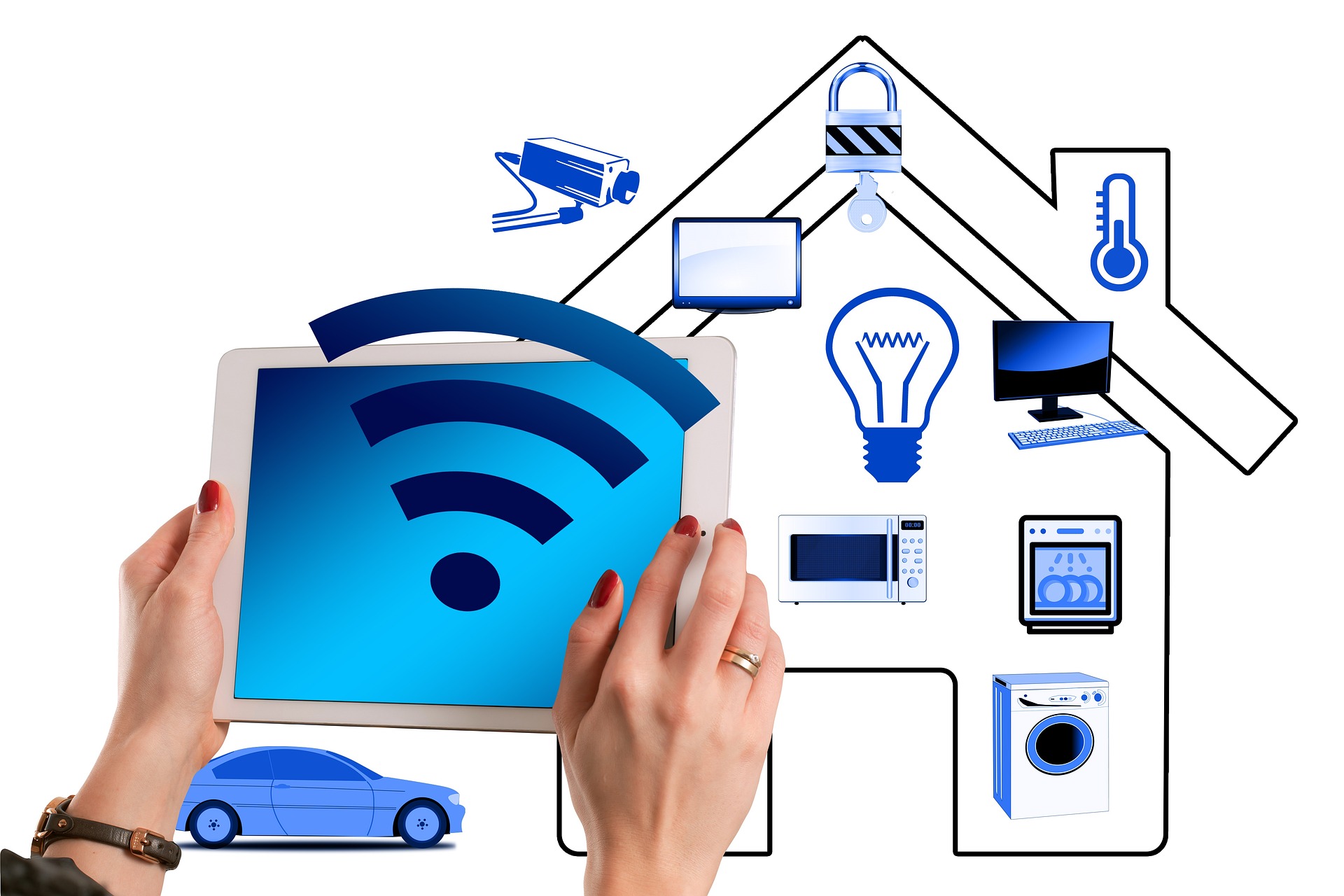
    IoT (Internet of Things) is a technology in which devices and sensors communicate via the Internet to collect and share data. Smart home appliances that have been released for home use in recent years are also products that use IoT technology.

    As the name suggests, an IoT system is a system that uses IoT technology. It is used not only in factories but also in vending machines and home appliances, and it is expected that collecting and analyzing data will make life more comfortable and make work more efficient.


    IoT system components

    The IoT system consists of the following elements:

    • device
    • network
    • application
    • storage

    Device

    Devices mainly refer to hardware such as actuators, temperature sensors, humidity sensors, cameras, and smart meters. The device’s role is to collect the following data.

    • temperature
    • humidity
    • Whether there are humans or pets
    • Power usage status

    It is also possible to operate on “things”. For example, perform the following actions:

    • make a sound
    • Operate the remote control
    • opening/closing the door
    • Discharging food given to pets

    Devices in IoT also have the role of connecting to the Internet and sending and receiving data.

    Network

    IoT systems require networks to send and receive data between devices and between devices and applications. The following are network technologies used in IoT systems.

    • Wifi
    • Bluetooth
    • 3G, 4G, 5G
    • M2M communication (device-to-device communication)

    In order for a device to process the information it collects, it must send and receive data. The wireless and mobile networks mentioned above are the constituent elements of the data transmission and reception path in the IoT system.

    Application

    In IoT systems, applications are used to process and analyze data. It may be easier to understand if you think of them as being in charge of utilizing the collected data.

    The application also has the role of issuing instructions to the device based on the analyzed information. In the case of an air conditioner IoT system, energy savings can be achieved by issuing an instruction such as “According to the data collected by the sensor, there is no one around at the moment, so let’s turn off the power.”

    Storage

    Storage is used as a place to store collected data. In many cases, cloud storage will be used. In IoT systems, the amount of data collected by devices increases as the usage time increases.

    With more data, applications are likely to perform more effective analysis. However, there is no numerical value such as “the optimal amount of data is XX GB”, nor does it mean that more data is better. Therefore, data needs to be collected and stored for a while. By using storage with a large upper limit that can be collected, it is possible to accumulate and analyze the necessary data.

    Background to the spread of IoT systems

    It can be said that IoT systems have spread rapidly in recent years.

    • Network acceleration
    • Popularization of smaller devices
    • Reducing manufacturing costs through the development of advanced technology

    Network acceleration

    One of the important factors behind the spread of IoT systems is the increase in network speed. Recently, high-speed and stable Internet connections have become widespread, and mobile communication technology continues to develop. These advances in network technology have enabled large numbers of devices to send and receive data simultaneously. By using a high-speed network, we are able to exchange information in real time with little communication delay.

    As mentioned earlier, networks are essential for IoT systems. As network technology has evolved and data transmission and reception within IoT systems has become faster, convenience has improved. As a result, it is thought that the number of people who want to use IoT systems continues to increase.

    Popularization of smaller devices

    One of the reasons behind the spread of IoT systems is the spread of small and power-saving devices. Among the components of IoT systems, this is the development of devices.

    Advances in industrial technology and science have made it possible to create small yet high-performance devices such as sensors and controllers. Small devices are more energy efficient than large devices, and have the advantage of being easier to use in household products. Advances in device miniaturization have made it possible to incorporate devices into a variety of products.

    Even small devices can collect data in real time. It can be said that the progress made in achieving smaller size and higher performance of IoT devices is directly linked to the spread of IoT systems.

    Manufacturing cost reduction through the development of advanced technology

    The reason behind the spread of IoT systems is the decline in manufacturing costs due to the development of advanced technology. This is also a story about devices among the components of an IoT system. IoT devices have also become cheaper to manufacture due to advances in semiconductor technology, microprocessors, energy efficient device designs, and many other related technologies.

    Furthermore, as an advanced technology, the application aspects of the components of IoT systems are also evolving. Advances in cloud computing and big data technology have also reduced the cost of data collection and processing.

    The above two technologies have made it possible to manufacture high-performance IoT devices at low cost, and the convenience of the IoT system as a whole has improved, which is why IoT systems are becoming more popular.

    What you can do with IoT systems

    What you can do with IoT systems

    The following are examples of what can be done with IoT systems.

    • Operations on things
    • Monitoring the status and operation of things
    • Communication between things

    Operations on things

    IoT systems allow users (humans) to operate things remotely.

    For example, in a smart house, you can use your smartphone or tablet to adjust the temperature of your home’s air conditioner, turn on/off lights, and feed your pet. Smart cars also use mobile apps to unlock the car’s doors and start the engine.

    By using IoT systems, it is possible to operate things via a network even when the user is not present.

    Monitoring the status and operation of things

    IoT systems can monitor the status and operation of things in real time. Devices such as sensors and actuators are embedded in products to collect and send data to applications and storage.

    For example, a refrigerator with a built-in temperature sensor monitors the temperature inside the refrigerator and notifies the user if the temperature is abnormal. This not only allows users to notice abnormalities inside the refrigerator, but also helps prevent food from deteriorating if noticed early.

    Let’s also consider the example of a smart meter installed as an electricity meter. Smart meters not only monitor electricity usage and notify the utility company, but also provide recommendations to users on how to improve their electricity usage based on the collected data and analysis results.

    By monitoring the status and operation of things through IoT systems, it is possible to improve efficiency and safety, and discover problems early.

    Communication between things

    IoT systems allow things (products) to communicate with each other.

    For example, in a smart home, sensors and smartphones communicate to share data and perform operations. In addition, in factories, manufacturing lines that use IoT systems allow machines to share data with each other. As a result, it will be possible to understand the details and progress of the preceding and succeeding processes, which will help improve operational efficiency and detect abnormalities.

    The use of IoT systems allows things to communicate with each other, making life and work more efficient and convenient.


    IoT system development flow

    IoT system development flow

    The general waterfall development flow for IoT systems is as follows.

    • Requirements definition and design
    • implementation
    • quality test
    • Release and maintenance operations

    Requirements definition and design

    Define requirements at the beginning of IoT system development. This is the process of clarifying the purpose and functionality of the system, working backwards from what users want, and understanding requirements and business needs.

    Requirements definition clarifies what devices and sensors are needed, how data will be acquired and processed, network connectivity, security requirements, etc. In addition, the necessary budget, number of development team members, period, etc. are determined at the requirements definition stage.

    Design is done after requirements definition. We provide technical details for the content documented in the requirements definition. Specific details include device architecture, data flow (network), user interface, etc.

    Implementation

    Once requirements definition and design are complete, implementation begins. We will actually create a pre-designed system as a program. The specific content to be implemented in an IoT system includes configuring devices and sensors, building network connections, and processing data. If you have any content that has been designed, such as cooperation with applications or cloud services, please implement it for those as well.

    During implementation, we select an appropriate programming language and framework in advance, and optimize the programming itself from the standpoint of safety and performance.

    Quality test

    After the implementation is complete, we will conduct a quality test. Specific examples of quality tests include functional tests, performance tests, unit tests, and coordination tests.

    Functional test: Check whether it can operate as required
    Performance test: Evaluate whether it can withstand a certain load, communication speed, processing speed, etc.
    Unit test: Check whether one function operates as expected
    Linkage testing: Not only does it meet the specifications, but it also confirms that there are no abnormalities in areas where there were no problems in the unit test when multiple functions are combined.

    If we determine that the quality does not meet the standards through quality testing, we will provide feedback to the design and implementation.

    Release and maintenance operations

    After passing the quality test, release your IoT system. At release, we will install and configure the system and create documentation for users.

    After release, system maintenance and operation will begin. The goals of maintenance operations are to maintain system stability and performance, and improve user satisfaction. Specifically, we carry out periodic bug fixes and troubleshooting for the entire system.

    It is also necessary to improve customer support. You may end up developing new features based on actual customer feedback.


    Examples of IoT system introduction

    Examples of IoT system introduction

    We will introduce three examples of introducing IoT systems.

    • Apartment that looks after seniors
    • You can check the status of the trash can


    Apartment that looks after seniors

    Families who live far away from an elderly person often find it burdensome to visit them regularly to check on their condition. This condominium collects data on usage frequency and status by having customers use home appliances that incorporate an IoT system.

    If an abnormality is detected in the data, a notification will be sent to the condominium management office, which will help prevent any accidents. By using the IoT system, we are contributing not only to families in need of nursing care, but also to the nursing care industry.


    You can check the status of the trash can

    Nippon Systemware has developed “BigBelly Solar,” a trash can that incorporates IoT. The collection status of garbage accumulated in the trash can is visualized, making garbage collection more efficient. It also has an automatic garbage compaction function, so you can check the accumulation status and have the advantage of preventing garbage from overflowing from the trash can.

    By visualizing the collection status of each trash can, you will be able to see which trash cans are used more frequently and which ones are less frequently used, and you will be able to more efficiently consider areas where you should increase or decrease the number of trash cans.
    This is an example that shows how using IoT devices can help solve familiar problems.

    Sunstar has developed G・U・M PLAY, a device that works with a smartphone to record tooth brushing status. By incorporating a sensor into your toothbrush, you can score your tooth brushing based on the movement of your toothbrush and the time you brush.

    Users can use a smartphone app to view the data collected by the toothbrush and understand how well they are brushing their teeth. The app analyzes your tooth brushing data and gives you advice on how to best brush your teeth.

    This is an example of using an IoT system to visualize something that you cannot understand even if you do it yourself.

    Introduction to IoT system certification

    Introduction to IoT system certification

    From here, we will explain the following two contents about the “IoT System Technology Certification Exam”, an exam that can check the development and knowledge of IoT systems.

    • Overview of IoT System Certification and Benefits of Taking the Test
    • Skills and knowledge gained through IoT system certification


    Overview of IoT System Certification and Benefits of Taking the Test

    The exam has three levels: advanced, intermediate, and basic. Only the advanced level requires exam qualification, and you must have passed the intermediate level or taken a certification program. The exam method is basic, with the intermediate level being a CBT exam (multiple choice questions), and the advanced level being an essay exam based on the course content and course content.

    If you are a beginner in IoT systems or are taking the test for the first time, it is recommended that you take the test from the basic level. The purpose of the IoT System Certification is to develop IoT engineers, and each exam requires a certain level of knowledge.

    The benefit of passing the test is that you will have more opportunities to work in businesses related to IoT system development (including sales, etc.). Having a qualification will show off that you have knowledge, which can also be used when looking for a job.


    Skills and knowledge gained through IoT system certification

    The skills gained through the IoT System Certification are the knowledge that is appropriate to the level of each exam. For example, at the basic level, the content would be as follows.

    • IoT system configuration and construction technology
    • Sensor/actuator technology and communication method
    • IoT data utilization technology (AI)
    • IoT information security measures technology
    • IoT system prototyping technology

    There are some parts that overlap with the content explained in this article. The exam will ask you about more detailed information, so it is a good idea to prepare for the exam using a question set.

    summary

    summary

    We provided an overview of the IoT system, its components, the background of its spread, what it can do, the development flow, implementation examples, and IoT system certification.

    The number of household appliances that use IoT systems is increasing every day, and this trend is expected to continue in the future. In order to coexist with IoT systems in your life, it is important to understand the basics explained in this article.


    Follow us on Facebook for updates and exclusive content! Click here: Each Techy
  • What is an IoT system? Explaining the basic configuration, development flow, examples, etc.

    What is an IoT system? Explaining the basic configuration, development flow, examples, etc.

    “I hear that IoT is popular, but I don’t know how it works.” “I don’t know how to proceed with IoT system development.”

    If you are reading this article, you may have questions like the ones above. In this article, we will explain the configuration of the IoT system, what it can do, the development flow, and usage examples. We also introduce the “IoT System Technology Certification”, which is a test for those who want to learn about IoT systems, so please refer to it.


    IoT and IoT systems

    IoT and IoT systems

    IoT (Internet of Things) is a technology in which devices and sensors communicate via the Internet to collect and share data. Smart home appliances that have been released for home use in recent years are also products that use IoT technology.

    As the name suggests, an IoT system is a system that uses IoT technology. It is used not only in factories but also in vending machines and home appliances, and it is expected that collecting and analyzing data will make life more comfortable and make work more efficient.


    IoT system components

    The IoT system consists of the following elements:

    • device
    • network
    • application
    • storage

    Device

    Devices mainly refer to hardware such as actuators, temperature sensors, humidity sensors, cameras, and smart meters. The device’s role is to collect the following data.

    • temperature
    • humidity
    • Whether there are humans or pets
    • Power usage status

    It is also possible to operate on “things”. For example, perform the following actions:

    • make a sound
    • Operate the remote control
    • opening/closing the door
    • Discharging food given to pets

    Devices in IoT also have the role of connecting to the Internet and sending and receiving data.

    Network

    IoT systems require networks to send and receive data between devices and between devices and applications. The following are network technologies used in IoT systems.

    • Wifi
    • Bluetooth
    • 3G, 4G, 5G
    • M2M communication (device-to-device communication)

    In order for a device to process the information it collects, it must send and receive data. The wireless and mobile networks mentioned above are the constituent elements of the data transmission and reception path in the IoT system.

    Application

    In IoT systems, applications are used to process and analyze data. It may be easier to understand if you think of them as being in charge of utilizing the collected data.

    The application also has the role of issuing instructions to the device based on the analyzed information. In the case of an air conditioner IoT system, energy savings can be achieved by issuing an instruction such as “According to the data collected by the sensor, there is no one around at the moment, so let’s turn off the power.”

    Storage

    Storage is used as a place to store collected data. In many cases, cloud storage will be used. In IoT systems, the amount of data collected by devices increases as the usage time increases.

    With more data, applications are likely to perform more effective analysis. However, there is no numerical value such as “the optimal amount of data is XX GB”, nor does it mean that more data is better. Therefore, data needs to be collected and stored for a while. By using storage with a large upper limit that can be collected, it is possible to accumulate and analyze the necessary data.

    Background to the spread of IoT systems

    It can be said that IoT systems have spread rapidly in recent years.

    • Network acceleration
    • Popularization of smaller devices
    • Reducing manufacturing costs through the development of advanced technology

    Network acceleration

    One of the important factors behind the spread of IoT systems is the increase in network speed. Recently, high-speed and stable Internet connections have become widespread, and mobile communication technology continues to develop. These advances in network technology have enabled large numbers of devices to send and receive data simultaneously. By using a high-speed network, we are able to exchange information in real time with little communication delay.

    As mentioned earlier, networks are essential for IoT systems. As network technology has evolved and data transmission and reception within IoT systems has become faster, convenience has improved. As a result, it is thought that the number of people who want to use IoT systems continues to increase.

    Popularization of smaller devices

    One of the reasons behind the spread of IoT systems is the spread of small and power-saving devices. Among the components of IoT systems, this is the development of devices.

    Advances in industrial technology and science have made it possible to create small yet high-performance devices such as sensors and controllers. Small devices are more energy efficient than large devices, and have the advantage of being easier to use in household products. Advances in device miniaturization have made it possible to incorporate devices into a variety of products.

    Even small devices can collect data in real time. It can be said that the progress made in achieving smaller size and higher performance of IoT devices is directly linked to the spread of IoT systems.

    Manufacturing cost reduction through the development of advanced technology

    The reason behind the spread of IoT systems is the decline in manufacturing costs due to the development of advanced technology. This is also a story about devices among the components of an IoT system. IoT devices have also become cheaper to manufacture due to advances in semiconductor technology, microprocessors, energy efficient device designs, and many other related technologies.

    Furthermore, as an advanced technology, the application aspects of the components of IoT systems are also evolving. Advances in cloud computing and big data technology have also reduced the cost of data collection and processing.

    The above two technologies have made it possible to manufacture high-performance IoT devices at low cost, and the convenience of the IoT system as a whole has improved, which is why IoT systems are becoming more popular.

    What you can do with IoT systems

    What you can do with IoT systems

    The following are examples of what can be done with IoT systems.

    • Operations on things
    • Monitoring the status and operation of things
    • Communication between things

    Operations on things

    IoT systems allow users (humans) to operate things remotely.

    For example, in a smart house, you can use your smartphone or tablet to adjust the temperature of your home’s air conditioner, turn on/off lights, and feed your pet. Smart cars also use mobile apps to unlock the car’s doors and start the engine.

    By using IoT systems, it is possible to operate things via a network even when the user is not present.

    Monitoring the status and operation of things

    IoT systems can monitor the status and operation of things in real time. Devices such as sensors and actuators are embedded in products to collect and send data to applications and storage.

    For example, a refrigerator with a built-in temperature sensor monitors the temperature inside the refrigerator and notifies the user if the temperature is abnormal. This not only allows users to notice abnormalities inside the refrigerator, but also helps prevent food from deteriorating if noticed early.

    Let’s also consider the example of a smart meter installed as an electricity meter. Smart meters not only monitor electricity usage and notify the utility company, but also provide recommendations to users on how to improve their electricity usage based on the collected data and analysis results.

    By monitoring the status and operation of things through IoT systems, it is possible to improve efficiency and safety, and discover problems early.

    Communication between things

    IoT systems allow things (products) to communicate with each other.

    For example, in a smart home, sensors and smartphones communicate to share data and perform operations. In addition, in factories, manufacturing lines that use IoT systems allow machines to share data with each other. As a result, it will be possible to understand the details and progress of the preceding and succeeding processes, which will help improve operational efficiency and detect abnormalities.

    The use of IoT systems allows things to communicate with each other, making life and work more efficient and convenient.


    IoT system development flow

    IoT system development flow

    The general waterfall development flow for IoT systems is as follows.

    • Requirements definition and design
    • implementation
    • quality test
    • Release and maintenance operations

    Requirements definition and design

    Define requirements at the beginning of IoT system development. This is the process of clarifying the purpose and functionality of the system, working backwards from what users want, and understanding requirements and business needs.

    Requirements definition clarifies what devices and sensors are needed, how data will be acquired and processed, network connectivity, security requirements, etc. In addition, the necessary budget, number of development team members, period, etc. are determined at the requirements definition stage.

    Design is done after requirements definition. We provide technical details for the content documented in the requirements definition. Specific details include device architecture, data flow (network), user interface, etc.

    Implementation

    Once requirements definition and design are complete, implementation begins. We will actually create a pre-designed system as a program. The specific content to be implemented in an IoT system includes configuring devices and sensors, building network connections, and processing data. If you have any content that has been designed, such as cooperation with applications or cloud services, please implement it for those as well.

    During implementation, we select an appropriate programming language and framework in advance, and optimize the programming itself from the standpoint of safety and performance.

    Quality test

    After the implementation is complete, we will conduct a quality test. Specific examples of quality tests include functional tests, performance tests, unit tests, and coordination tests.

    Functional test: Check whether it can operate as required
    Performance test: Evaluate whether it can withstand a certain load, communication speed, processing speed, etc.
    Unit test: Check whether one function operates as expected
    Linkage testing: Not only does it meet the specifications, but it also confirms that there are no abnormalities in areas where there were no problems in the unit test when multiple functions are combined.

    If we determine that the quality does not meet the standards through quality testing, we will provide feedback to the design and implementation.

    Release and maintenance operations

    After passing the quality test, release your IoT system. At release, we will install and configure the system and create documentation for users.

    After release, system maintenance and operation will begin. The goals of maintenance operations are to maintain system stability and performance, and improve user satisfaction. Specifically, we carry out periodic bug fixes and troubleshooting for the entire system.

    It is also necessary to improve customer support. You may end up developing new features based on actual customer feedback.


    Examples of IoT system introduction

    Examples of IoT system introduction

    We will introduce three examples of introducing IoT systems.

    • Apartment that looks after seniors
    • You can check the status of the trash can


    Apartment that looks after seniors

    Families who live far away from an elderly person often find it burdensome to visit them regularly to check on their condition. This condominium collects data on usage frequency and status by having customers use home appliances that incorporate an IoT system.

    If an abnormality is detected in the data, a notification will be sent to the condominium management office, which will help prevent any accidents. By using the IoT system, we are contributing not only to families in need of nursing care, but also to the nursing care industry.


    You can check the status of the trash can

    Nippon Systemware has developed “BigBelly Solar,” a trash can that incorporates IoT. The collection status of garbage accumulated in the trash can is visualized, making garbage collection more efficient. It also has an automatic garbage compaction function, so you can check the accumulation status and have the advantage of preventing garbage from overflowing from the trash can.

    By visualizing the collection status of each trash can, you will be able to see which trash cans are used more frequently and which ones are less frequently used, and you will be able to more efficiently consider areas where you should increase or decrease the number of trash cans.
    This is an example that shows how using IoT devices can help solve familiar problems.

    Sunstar has developed G・U・M PLAY, a device that works with a smartphone to record tooth brushing status. By incorporating a sensor into your toothbrush, you can score your tooth brushing based on the movement of your toothbrush and the time you brush.

    Users can use a smartphone app to view the data collected by the toothbrush and understand how well they are brushing their teeth. The app analyzes your tooth brushing data and gives you advice on how to best brush your teeth.

    This is an example of using an IoT system to visualize something that you cannot understand even if you do it yourself.

    Introduction to IoT system certification

    Introduction to IoT system certification

    From here, we will explain the following two contents about the “IoT System Technology Certification Exam”, an exam that can check the development and knowledge of IoT systems.

    • Overview of IoT System Certification and Benefits of Taking the Test
    • Skills and knowledge gained through IoT system certification


    Overview of IoT System Certification and Benefits of Taking the Test

    The exam has three levels: advanced, intermediate, and basic. Only the advanced level requires exam qualification, and you must have passed the intermediate level or taken a certification program. The exam method is basic, with the intermediate level being a CBT exam (multiple choice questions), and the advanced level being an essay exam based on the course content and course content.

    If you are a beginner in IoT systems or are taking the test for the first time, it is recommended that you take the test from the basic level. The purpose of the IoT System Certification is to develop IoT engineers, and each exam requires a certain level of knowledge.

    The benefit of passing the test is that you will have more opportunities to work in businesses related to IoT system development (including sales, etc.). Having a qualification will show off that you have knowledge, which can also be used when looking for a job.


    Skills and knowledge gained through IoT system certification

    The skills gained through the IoT System Certification are the knowledge that is appropriate to the level of each exam. For example, at the basic level, the content would be as follows.

    • IoT system configuration and construction technology
    • Sensor/actuator technology and communication method
    • IoT data utilization technology (AI)
    • IoT information security measures technology
    • IoT system prototyping technology

    There are some parts that overlap with the content explained in this article. The exam will ask you about more detailed information, so it is a good idea to prepare for the exam using a question set.

    summary

    summary

    We provided an overview of the IoT system, its components, the background of its spread, what it can do, the development flow, implementation examples, and IoT system certification.

    The number of household appliances that use IoT systems is increasing every day, and this trend is expected to continue in the future. In order to coexist with IoT systems in your life, it is important to understand the basics explained in this article.


    Follow us on Facebook for updates and exclusive content! Click here: Each Techy